
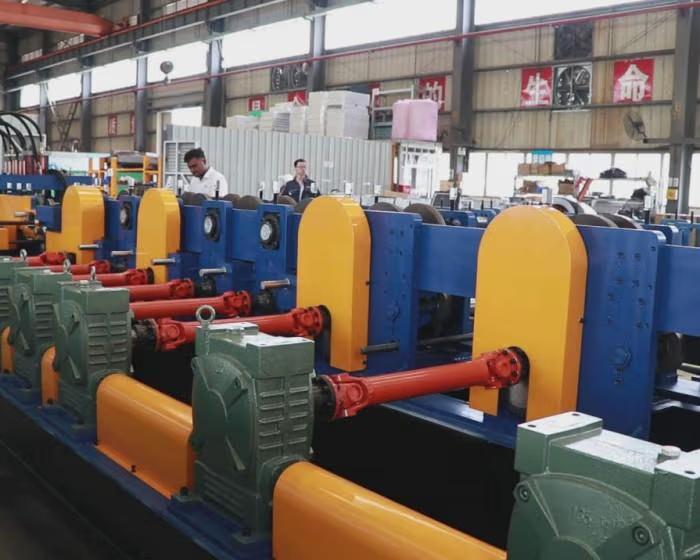
In today's competitive manufacturing environment, product consistency is one of the most important factors influencing customer satisfaction and operational success. Industries such as construction, infrastructure, and industrial manufacturing rely on steel components that meet precise specifications and maintain uniform quality throughout every production batch. Even minor variations can affect installation efficiency, structural performance, and overall project outcomes.
Roll forming machines have become a preferred solution for manufacturers seeking consistent and reliable production results. Through continuous processing, advanced automation, and precise control systems, these machines help ensure that every profile produced meets the required standards. Modern equipment such as a cold formed steel machine plays a vital role in maintaining consistency while supporting efficient manufacturing operations.
The Importance of Product Consistency in Manufacturing
Consistent products are essential for projects that require accurate dimensions and dependable performance. In construction applications, for example, steel profiles must fit together correctly to ensure structural stability and efficient installation.
Inconsistent production can lead to material waste, project delays, increased costs, and customer dissatisfaction. Manufacturers that prioritize consistency are better positioned to build strong reputations and maintain long-term customer relationships.
As quality expectations continue to rise, product consistency has become a key competitive advantage in the manufacturing industry.
How Roll Forming Machines Enhance Product Consistency
Precision Engineering
Roll forming machines are designed to shape metal coils through a series of carefully engineered rollers. This controlled process ensures that each profile is formed according to exact specifications.
Precise manufacturing helps maintain uniform dimensions across large production runs.
Automated Production Controls
Modern roll forming equipment incorporates advanced automation systems that continuously monitor and manage production parameters. Automated controls help maintain stable operating conditions throughout the manufacturing process.
This reduces variability and supports consistent product quality.
Continuous Production Process
Unlike some traditional fabrication methods, roll forming is a continuous manufacturing process. Continuous operation minimizes interruptions and helps maintain uniformity from one profile to the next.
As a result, manufacturers can achieve highly consistent production outcomes.
Reduced Human Error
Automation reduces the need for frequent manual adjustments during production. Fewer manual interventions help decrease the likelihood of errors that could affect product quality.
This contributes to greater reliability and improved manufacturing efficiency.
Real-Time Quality Monitoring
Many modern roll forming systems include monitoring technologies that provide immediate feedback on machine performance and production conditions. Operators can identify and address potential issues before they impact product quality.
Proactive monitoring supports long-term consistency and operational stability.
Applications Requiring Consistent Steel Profiles
Product consistency is especially important in the production of components used for:
- Commercial buildings
- Industrial facilities
- Warehouses and distribution centers
- Agricultural structures
- Roofing systems
- Wall cladding applications
- Steel framing systems
- Infrastructure projects
These applications depend on accurate and uniform steel profiles to ensure proper installation and reliable performance.
Choosing the Right Roll Forming Equipment
Manufacturers seeking improved consistency should evaluate equipment based on factors such as machine accuracy, automation capabilities, monitoring systems, production reliability, and operational flexibility.
Businesses investing in a cold formed steel machine should consider its ability to maintain precise profile dimensions throughout extended production cycles. Likewise, a curving machine can help produce specialized curved components with consistent quality and accuracy.
Selecting advanced equipment can significantly improve manufacturing performance and support long-term business success.
Conclusion
Roll forming machines play a crucial role in improving product consistency by combining precision engineering, automation, continuous production, and real-time monitoring. These capabilities help manufacturers produce reliable steel profiles that meet strict quality standards while supporting efficient operations.
Whether utilizing a cold formed steel machine for structural steel manufacturing or a curving machine for specialized applications, modern roll forming technology provides the consistency needed to meet today's manufacturing demands. As industries continue to prioritize quality and performance, roll forming machines will remain an essential tool for achieving dependable production results.